Emerald ash borer (EAB) is one of the most destructive invasive forest pests ever introduced to North America. This small, metallic-green beetle attacks ash trees from the inside, and without treatment most infested ash trees decline and die. It has been confirmed in Maine since 2018 and is now firmly established across Southern Maine communities.
Tree Medics specializes in diagnosing and treating EAB, helping homeowners, businesses and municipalities preserve valuable ash trees before the damage becomes irreversible.
How emerald ash borer kills a tree
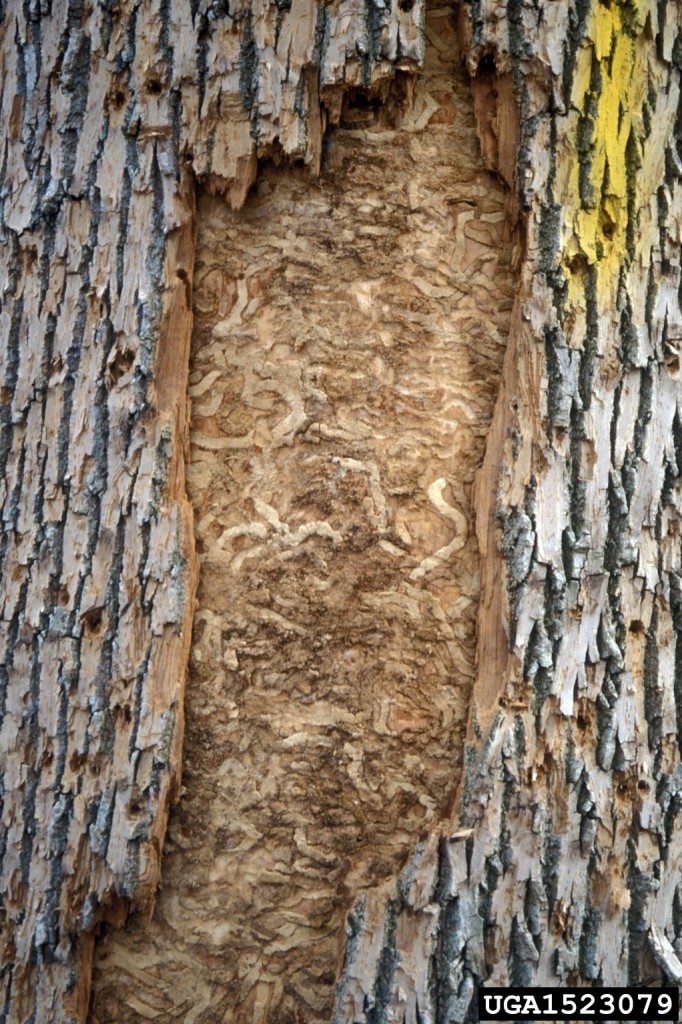
Adult beetles emerge in late spring and lay their eggs in the bark crevices of ash trees. When the eggs hatch, the larvae tunnel beneath the bark and feed on the tree’s vascular tissue, the layer that moves water and nutrients between the roots and the canopy. As those S-shaped feeding galleries spread and overlap, the tree is slowly starved from the inside.
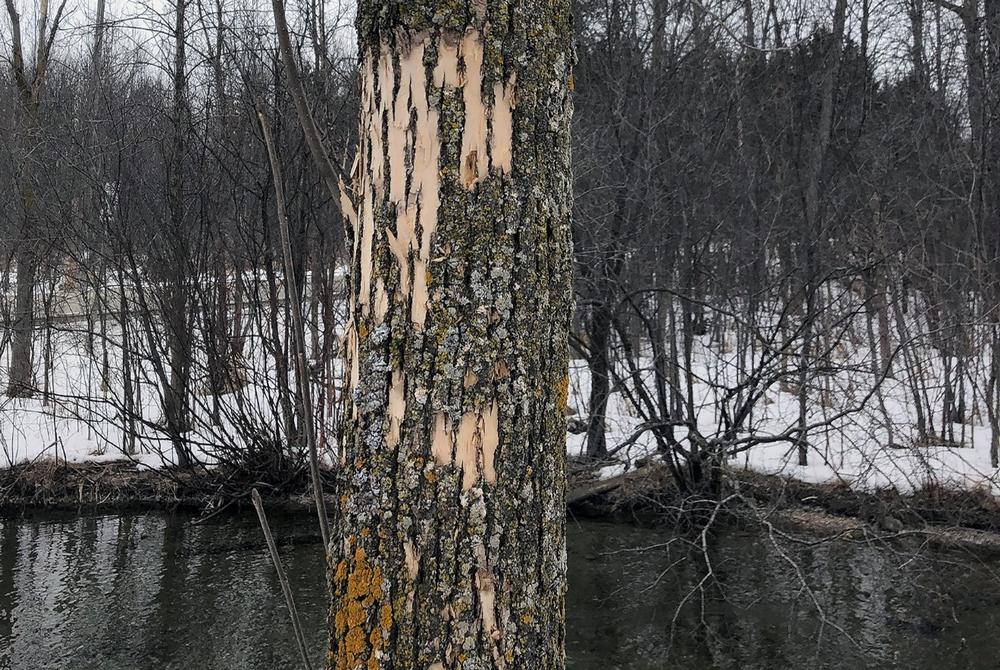
Signs your ash tree has EAB
How long do you have?
Once symptoms are visible, EAB moves quickly:
- Smaller ash treesCan die in as little as 1 to 3 years.
- Larger, mature ash treesTypically decline over roughly 2 to 5 years.
- Trees treated earlyOften respond very well and can stay healthy for the long term.
Can my ash tree be saved?
The honest answer is: it depends. Ash trees with early to moderate signs of infestation are often excellent candidates for treatment, and trees with less canopy loss and good structure frequently respond very well. Weather, the tree’s location and its overall health all play a role.
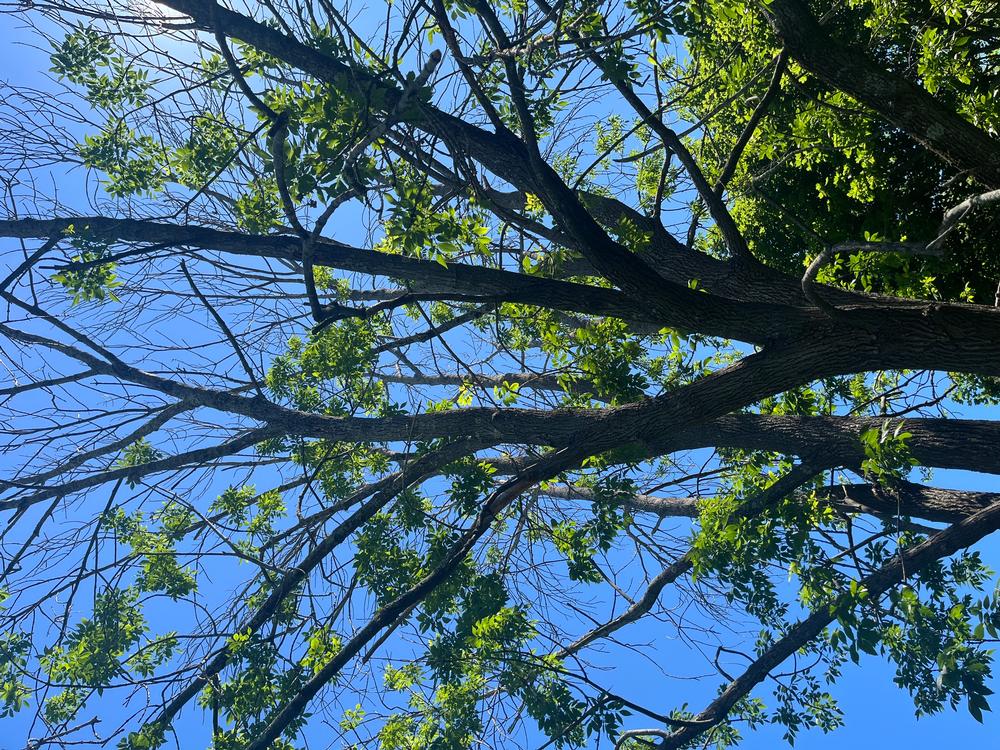
A widely used rule of thumb from university extension research: ash trees that have lost less than about 30 percent of their canopy usually respond well to treatment, while trees past that point rarely recover.
Severely declining trees, with extensive canopy loss, major bark damage or structural deterioration, may no longer be good candidates, and we will tell you so. Because the beetle is already established here, we often recommend treating healthy ash before an infestation shows up. An ounce of prevention really is worth a pound of cure.
Removing a large, dead ash near a home is expensive and can be dangerous, because infested ash becomes brittle. Protecting a healthy tree keeps its shade, value and beauty in place.
How we treat emerald ash borer
We use Arborjet trunk injection, which places the treatment directly into the tree’s vascular system. The tree carries it up through the trunk and into the canopy, where the larvae feed. Injections are done while the tree is in leaf, typically late spring through summer, and are typically repeated every two to three years, depending on the product, to maintain protection.
- Nothing sprayed into the air, so no drift onto people, pets or neighboring plants
- Safe to use near homes, water and play areas
- The same approach South Portland and Bangor use to protect their public ash trees
Use Erik’s free emerald ash borer treatment calculator. Measure around each ash tree at chest height and get an estimate in seconds.